
Participants do not only hear about grounding. They try it.
Off the Couch Method
Experiential groups for treatment and recovery settings.
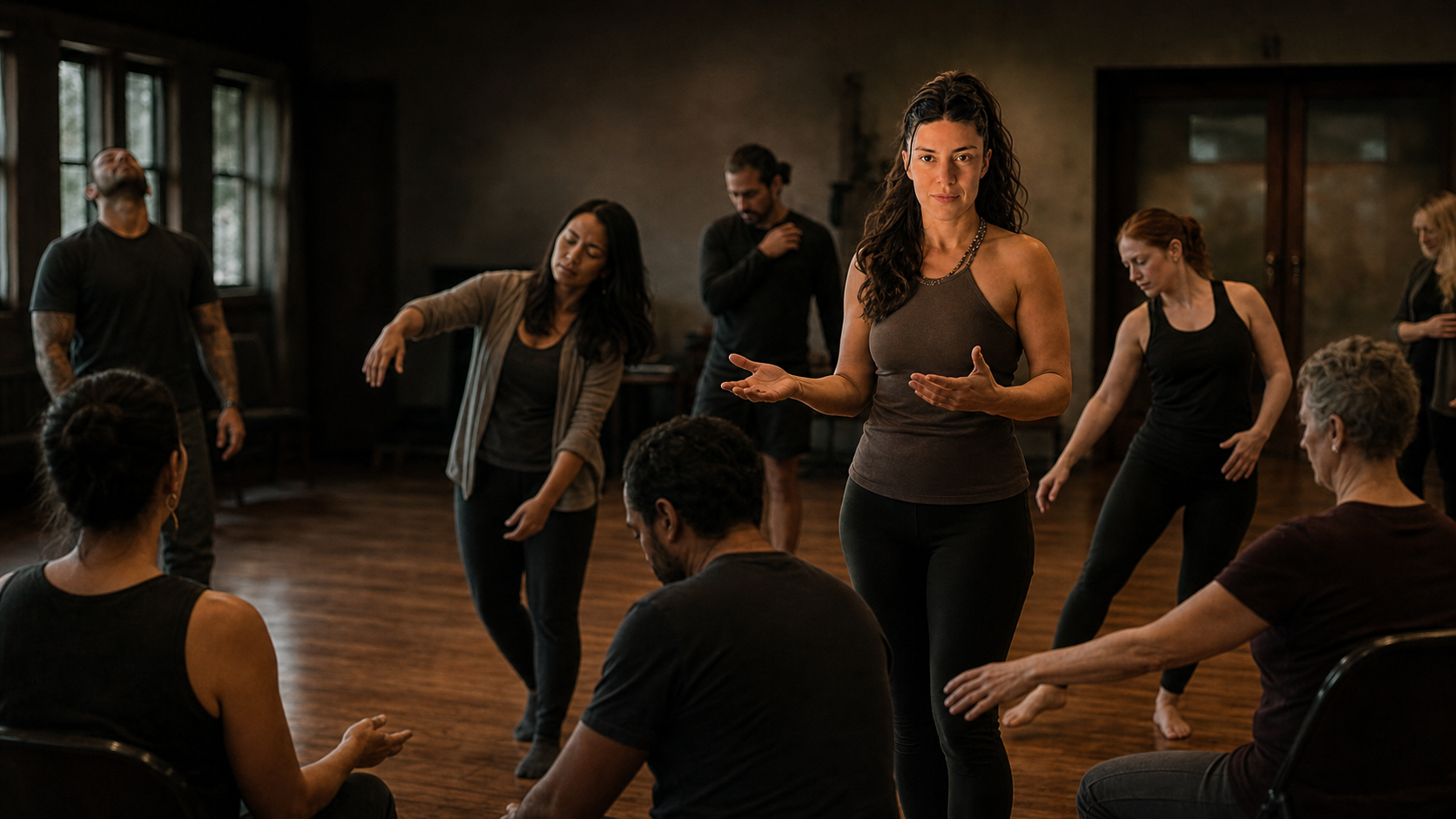
Nervous-system awareness is not something participants only have to understand. They can learn to experience it.
Somatic and experiential groups help participants recognize changes in state, explore practical self-regulation resources, and discover what helps their own system return to greater stability and choice.
Discuss groups for your facilityDesigned to complement existing clinical and recovery programming.A respectful starting point
Nothing is wrong with you. Period.
The body and nervous system are constantly responding to information. Responses that sometimes feel automatic or frustrating often developed because they were useful under particular circumstances.
Rather than treating those responses as evidence that something is wrong with the person, groups help participants become more aware of what their body is doing and experiment with additional resources for responding.
Your body is responding to information. Learning to notice those responses can give you more options for what to do next.
A repeatable rhythm
How a group works
- 01ArriveState check
- 02BriefTeaching
- 03ExperienceGuided practice
- 04NoticeWhat changed
- 05PracticeApply it
- 06Take awayPersonal tool
Each group combines concise psychoeducation with guided experiential practice. Participants have opportunities to notice their state before and after an exercise and begin identifying what is useful for their own system.
Experiential by design
Less lecture. More experience.
They do not only learn that movement can affect state. They experiment and notice.
They do not only receive breathing techniques. They test how their body responds.
They do not only hear about nervous-system states. They recognize their signals.
The facilitator provides information and experiences. Participants gather their own data.
Practical learning
What participants experience
State awareness
Recognizing activation, shutdown, and body signals.
Grounding & orientation
Using sensory information and the environment as resources for regulation.
Breath & physiology
Exploring how different breathing approaches can affect state.
Movement & stress
Gentle movement, posture, and rhythm as practical regulation resources.
Attention & perception
Experiencing how state can affect attention and what we notice.
The pause
Building awareness between an impulse and the next action.
Co-regulation
Exploring how safe connection, tone, rhythm, pace, and presence can influence state.
Embodied choice
Experimenting with posture, movement, expression, and different ways of inhabiting the body.
Personal regulation menu
Identifying tools and conditions participants find useful for their own system.
Flexible and modular
The 12-group curriculum
A structured progression of experiential groups that can be taken as a complete series or as individual topics.
01No One Starts in the Same Place+
A non-pathologizing introduction to state, context, and individual nervous-system differences.
02The One Who Notices+
Practicing awareness without demanding that an experience immediately change.
03Reading the Body’s Signals+
Recognizing cues of activation, settling, protection, and available capacity.
04Why Willpower Disappears+
Understanding how state can narrow attention, choice, and access to practiced skills.
05Safety Before Change+
Exploring why enough safety, pacing, and permission support learning.
06The Brake, the Gas, and the Pause+
Noticing acceleration, inhibition, and the small space where another response may become available.
07Completing the Stress Cycle Safely+
Trying bounded, choice-based ways to discharge or settle activation.
08The Lens You Look Through+
Observing how present state can shape interpretation without treating perception as fact.
09States in the Body+
Mapping posture, breath, sensation, energy, and impulse as useful information.
10The Self You Wear+
Exploring adaptive roles and strategies without confusing them with identity.
11We Regulate Together+
Experiencing how relational cues can increase or decrease access and flexibility.
12Inhabiting the Self on Purpose+
Integrating a personal menu of reachable practices for real situations.
Adaptable programming
Built for real treatment settings.
Programming can be shaped around population, schedule, program rhythm, and level of care. Each session can stand on its own while supporting deeper learning over time.

01
Detox / early stabilization
Lower-demand experiential practices emphasizing orientation, sensory grounding, simple state awareness, practical resources, and immediate self-regulation.
02
Residential
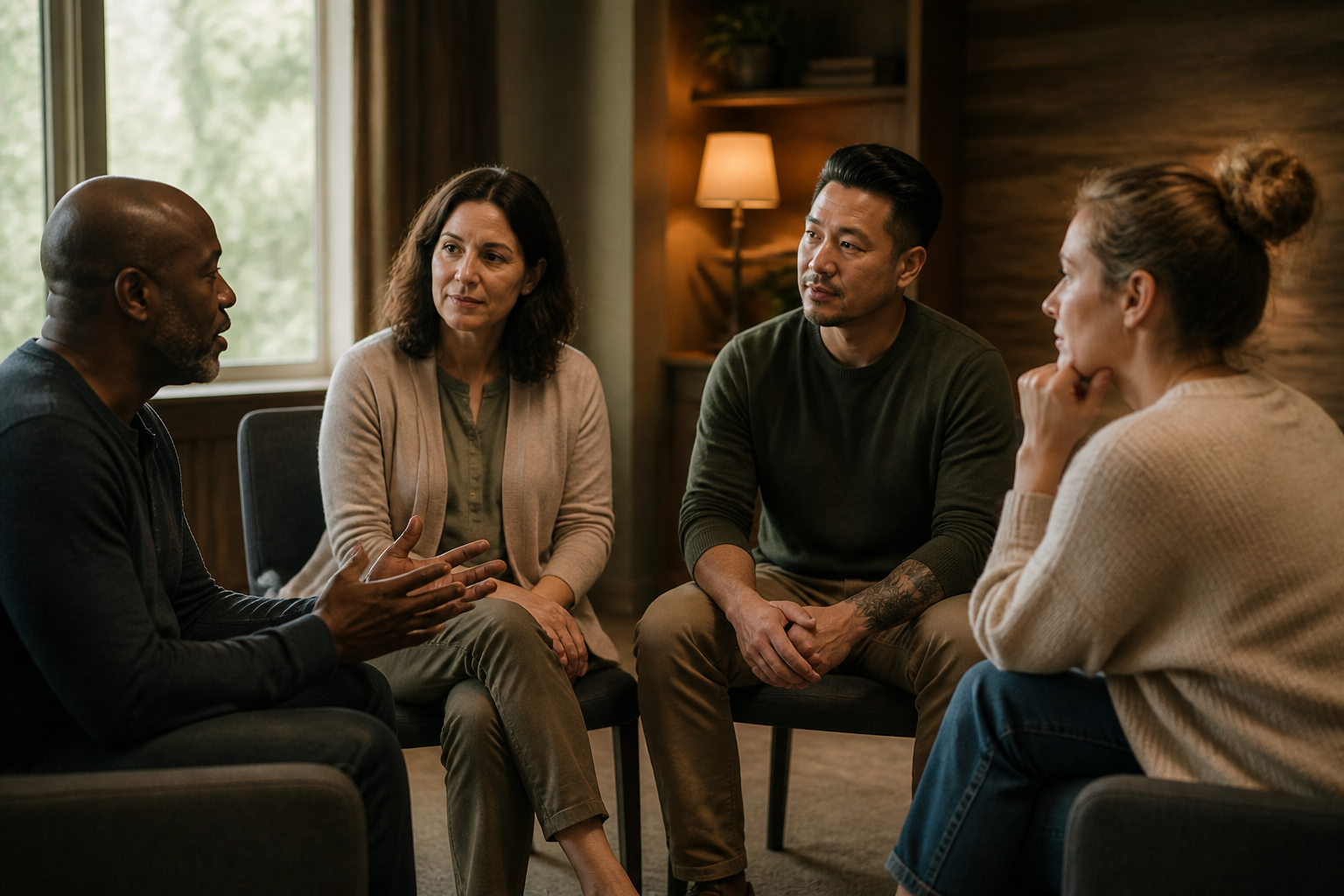
A deeper rhythm of awareness, breath, movement, posture, orienting, co-regulation, embodied experimentation, and practical self-regulation skills.

03
PHP / IOP
Continued experiential practice with state awareness and self-regulation resources participants can use between sessions and alongside the work they are already doing.